

Introduction
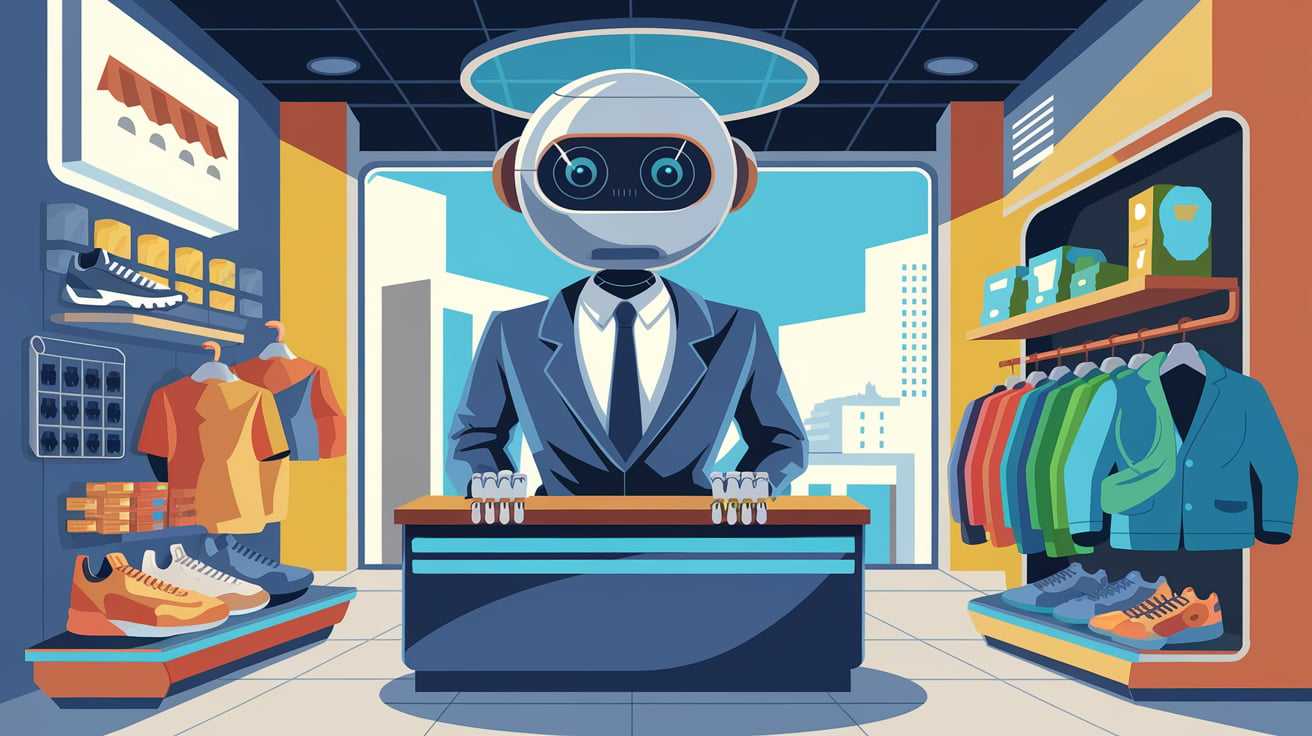
Did you know that 80% of customer interactions in retail can now be automated with AI-powered chatbot solutions for retail? According to a report by Neontri, 73% of consumers are open to AI-powered chatbots for customer service, and 60% have already used virtual assistants to make purchases. As AI technology continues to evolve, retailers are increasingly adopting these solutions to enhance customer engagement and streamline operations.
AI-Powered Chatbot technology doesn’t just save time and money—it significantly improves customer satisfaction by delivering fast, reliable, and real-time chatbot responses, offering personalized shopping experiences at scale.
The Retail Sector’s Challenges
Today, retailers battle to live up to ever rising customer expectations. Long response times infuriate, customer service experiences aren’t the same and all at the expense of high overhead costs that try and pass companies off finding more efficient solutions. AI-powered chatbot solutions for e-commerce businesses can address these challenges by offering 24/7 customer support chatbots and enhancing customer engagement with chatbots across multiple channels.
Enter AI-Powered Chatbots

And this is where AI powered chatbots come into play. What can these digital assistants do: answer customer questions, make personalized product recommendations, all they cost less and improve customer experience. And imagine having a powerful tool that can constantly work from 24×7, engage with your customers over numerous channels, and move the leads into the conversions without any downtime.
Purpose of the Blog Post
In this blog post, I’ll be talking about how AI chatbots are changing how retail operates. We’ll take a look at the benefits for customer service and sales, show you some real world success stories, and give you some actionable steps for your business to adopt this tech.
What Are AI-Powered Chatbots?
Definition and Basic Explanation
AI-powered chatbots for customer service are virtual assistants that use artificial intelligence to interact with your customers in real time – text or voice. A range of tasks are automated – like answering popular questions, making product recommendations and helping out on transactions. This makes chatbot solutions for retail an essential tool for any business looking to scale efficiently.
Types of AI Chatbots

- Rule-Based Chatbots
They are pre-defined script or decision trees based chatbots. But they’re good for simple repetitive tasks, like answering the most common questions about store hours and return policies. However, they may struggle with more complex inquiries that can benefit from machine learning chatbot capabilities. - Machine Learning-Based Chatbots
These chatbots are run by advanced algorithms that get smarter as users go, learning from user interactions. They become better at delivering personalized responses over time which makes them perfect for a dynamic and changing retail environment. In this case, they can analyze the purchase history of a customer to give the best product to recommend.
Now, let’s compare the capabilities of rule-based vs. machine learning-based chatbots:
Core Technologies Behind AI Chatbots

AI chatbots are fueled by cutting-edge technologies that enable their seamless operation:
- Natural Language Processing (NLP): Chatbots with NLP capability can understand and process human language, making interactions more conversational.
- Deep Learning: That allows the chat bots to learn data and to find patterns and improve their replies over time until the conversation is less dumb and more intelligent.
- Machine Learning (ML): The chatbot’s ability to learn from previous conversations allows it to constantly learn to improve its performance and systems of personalization through ML.
Together, these are the fast, intelligent, and scalable technologies that retail businesses need to stay competitive.
Benefits of AI Chatbots in Retail

Improved Customer Service
- 24/7 Availability
AI chatbots for sales work round-the-clock, providing assistance to customers at any time of the day or night. This is especially crucial for e-commerce businesses, where AI-powered chatbot solutions for e-commerce businesses ensure 24/7 customer support chatbots across all regions. - Instant Responses
Those days of customers waiting forever for an answer are long gone. AI chatbots answer really quick and query very fast, increasing overall satisfaction from customers. - Consistent Service
AI chatbots differ from human agents who can also be in any different tone and accuracy from time to time. - Personalized Interactions
Leveraging machine learning chatbot capabilities, chatbots analyze customer preferences to provide personalized shopping experiences. This tailored approach enhances customer engagement with chatbots and builds loyalty.
Cost Savings for Retailers
- Reduced Operational Costs
AI chatbots allow a business to minimize customer service teams by automating the repetitive tasks like answering FAQ, processing orders, tracking shipments on autopilot, and reducing overhead expenses. - Scalability
Whereas human agents can sit and monitor each customer call, one of the things that AI chatbots can do is handle hundreds—or thousands—of customer inquiries at once. The reason why they were an invaluable asset when they did not exist before is that during peak sales periods like Black Friday.
Enhanced Sales and Conversion Rates
- Personalized Product Recommendations
Often AI chatbots suggest products based on how customers browse history and what they buy. It usually boosts AOV, and improves users’ shopping experience. - Upselling and Cross-Selling
Chatbots recognize the right moments and recommend complementary products, say suggesting a matching scarf with a winter coat. It is some little upselling that can really increase sales. - Streamlined Checkout Process
Chatbots speed up the checkout process, guiding customers through steps or solving things like mistakes on payments, drastically decreasing the amount of abandoned carts and increasing conversions.
Let’s do a quick comparison to see cost differences between traditional customer service methods and chatbot integration.
Data Collection and Insights
- Customer Behavior Analysis
Interaction, AI chatbots will collect and understand the data of customer talk for various insights around preference, pain points but common inquiry. This data can help retailers to refine their strategy. - Trend Identification
Chatbots can help retailers keep track of customer queries and feedback to come up with emerging trends that require the company to modify their product items as well as keep up with the pace of the competition.
How AI Chatbots Enhance Customer Service in Retail
Handling Common Inquiries Efficiently
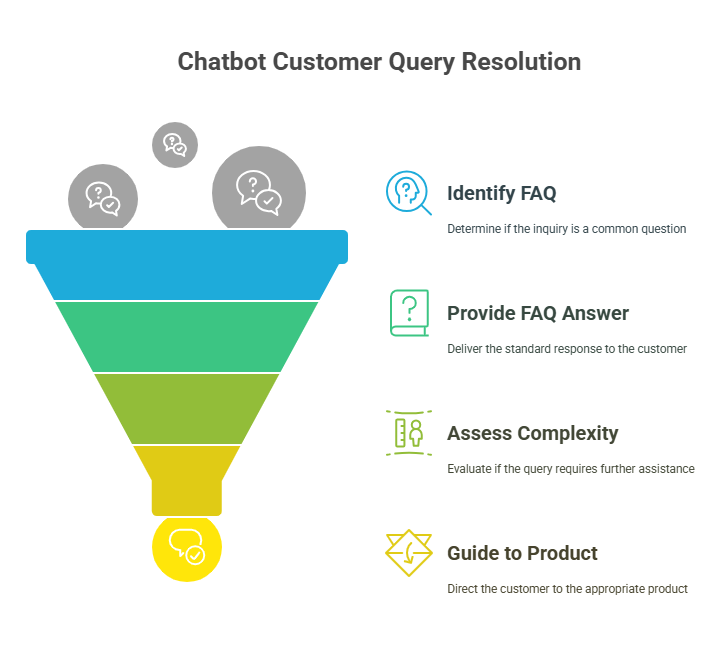
AI chatbot development for customer service excels at managing routine questions that often bog down customer support teams. They can answer queries about:
- Store hours: “I mean, what time does your store open on Sundays?”
- Return policies: “What if I had damaged an item they had sent me, and couldn’t return it to them?”
- Product availability: “Is this size available in stock still?’
- Shipping details: “When will my order arrive?”
If chatbots instantly and accurately handle these inquiries, human agents are freed up to handle more complex customer matters.
Virtual Shopping Assistants
AI chatbots act as personal shopping guides, making the shopping experience more enjoyable and efficient:
- Product Discovery
Chatbots have the ability of guiding the customers to the perfect product by examining the customers’ preferences, browsing history or even their inputs. Say, “I’m looking for a leather jacket?” Choose from these offerings by your size and the color you prefer.” - Guided Selling
They set customers up with targeted questions such as, “What kind of phone are you seeking—Android or iOS?” Using these answers, they suggest products to customers that are more likely to be purchased.
Seamless Multi-Channel Support
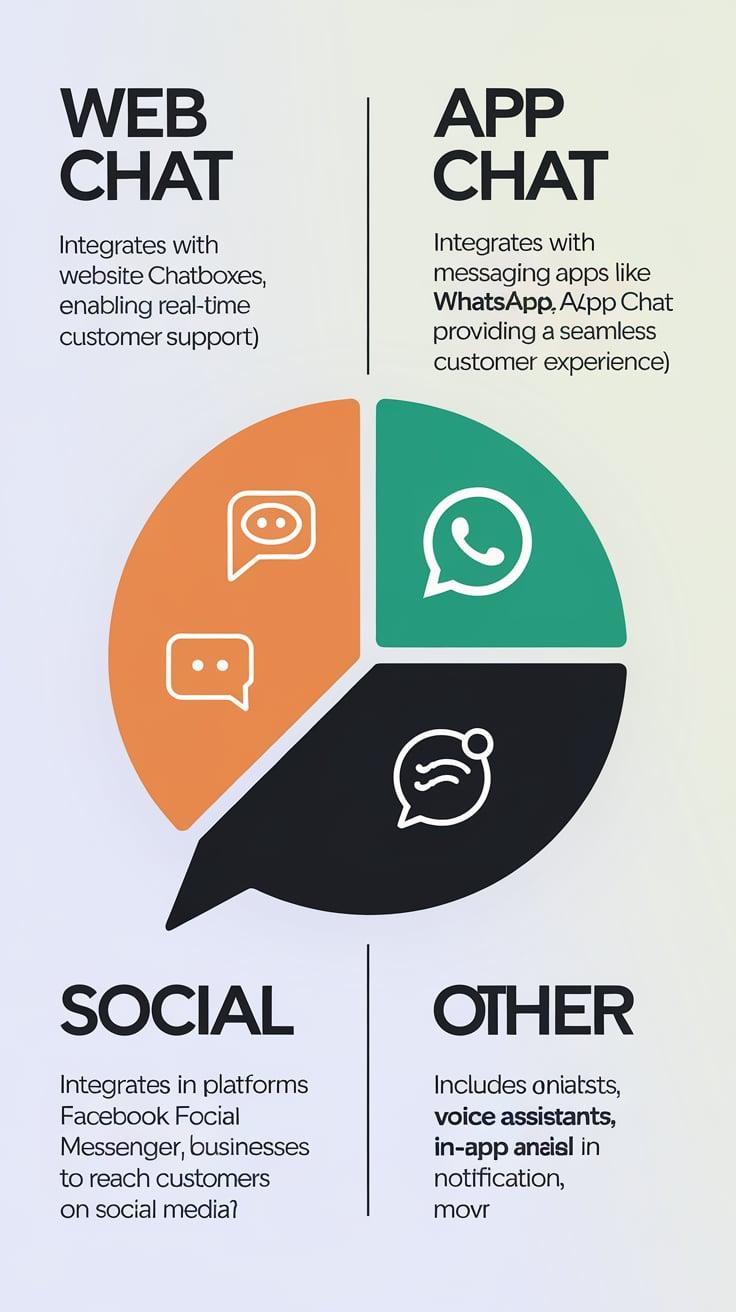
Today’s customers interact with brands across multiple platforms, and AI chatbots ensure a consistent experience no matter where the conversation takes place:
- Websites: Assist customers browsing an online store.
- Mobile Apps: Provide real-time answers within shopping apps.
- Social Media Platforms: Engage via Facebook Messenger, Instagram, or WhatsApp.
- Messaging Services: Offer support through popular platforms like Slack or SMS.
By providing this multi channel capability, it removes friction and increases customers’ efforts.
Proactive Customer Engagement
AI chatbots don’t just wait for customers to approach them—they actively engage with shoppers at critical points:
- Engagement at Key Points
- The chatbot can pop up if a customer is taking too long on a page, asking if they need help deciding on a size.
- The chatbot might then say: “We were just about to leave your cart behind, so you left an item in your cart, lemme know if you need help.”
- Customer Retention
Chatbots help brands stay top-of-mind by sending timely reminders about:- Special offers or sales: “20% off on your wishlist items this weekend!”
- Product restocks: “That jacket you wanted is back in stock. Grab it now!”
These proactive strategies boost engagement, reduce cart abandonment, and increase customer loyalty.
Here’s a quick comparison of Traditional vs. Chatbot-Driven Support
How AI Chatbots Drive Sales in Retail
Personalized Shopping Experience
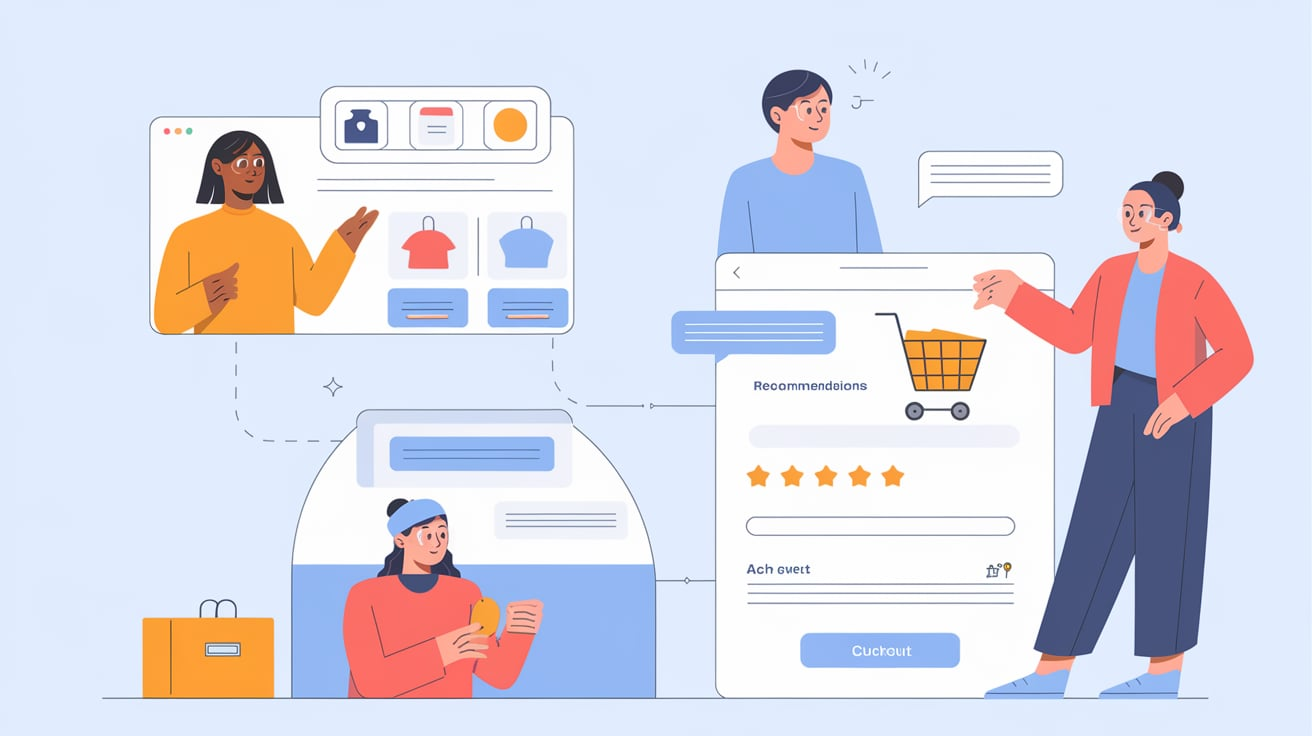
AI-powered chatbot solutions for e-commerce businesses transform the shopping journey by delivering personalized shopping experiences based on customer behavior. They analyze:
- Previous Purchases: If a customer has bought running shoes before, the chatbot may suggest the latest athletic wear or complementary gear like fitness trackers.
- Search History: Searching for “summer dresses”, a user may find it recommended to shop for sandals, or accessories.
- Preferences: Chatbots can memorize what customers want – their precise preferences such as their favorite product colors, brands or sizes – and provide the most relevant products.
Example: If a chatbot matches your interest in yoga mats, “Based on your interest in yoga mats, we think you’ll love these eco-friendly yoga blocks and straps.”
Optimizing the Checkout Process
AI chatbots streamline the checkout process, reducing friction that often leads to cart abandonment:
- Guided Transactions: Chatbots can also help a customer step by step through checkout, resolving problems like entering payment information, or choosing shipping options.
- Quick Answers: They answer questions about discounts, shipping fees, and payment methods immediately so customers have the confidence to go ahead and make the purchase.
Impact: An improved check out process will make the difference between more conversions and lower conversions for amounts of abandoned carts.
Increasing Average Order Value (AOV)
Sales chatbots in retail are powerful tools for boosting sales through strategic suggestions:
- Cross-Selling and Upselling
Chatbots for sales conversion recommend products that complement the customer’s selections.- Cross-Selling: “You might want to pair this dress with these stylish heels.”
- Upselling: “Upgrade to a premium version for just $20 more!”
- Discount and Promotion Alerts
Chatbots inform customers of personalized deals, such as, “Buy two shirts and get the third free!” or share time-sensitive promotions like, “Flash sale: 15% off for the next hour!”
The goal here is to nudge customers to spend more, pushing each item they buy to have higher average value.
Customer Insights and Targeted Marketing
AI chatbots collect and analyze data from every interaction, offering retailers a treasure trove of insights:
- Audience Segmentation: Chatbots can help group customers into groups depending on customer’s preferences, buying behaviour and engagement history.
- Targeted Campaigns: This data can be used by retailers to create personalized marketing campaigns that will speak to individual customers.
Example: A chatbot can track a customer’s interest in vegan skincare they may proceed by sending a personalized promotion such as; 20% off on cruelty free moisturizers this week.
Impact of pre-chatbot and post-chatbot sales
The following table highlights key sales metrics before and after the implementation of chatbots:
Challenges and Considerations

Implementation and Integration
Successfully integrating AI chatbot solutions into your retail operations requires careful planning:
- Tech Infrastructure: Retailers need robust systems to support chatbot integration with e-commerce tools like CRM software, sales platforms, and inventory management systems. Without this infrastructure, implementation can become cumbersome.
- Staff Training: Human agents must be trained to handle complex issues when chatbots escalate unresolved queries. Training ensures a seamless transition between bot and human support.
Maintaining a Balance Between Automation and Human Interaction
While AI chatbots excel at routine tasks, some situations demand a human touch:
- Personalized Assistance: Customers may prefer human agents for highly personalized support or sensitive issues.
- Complaint Resolution: Frustrated customers might seek empathetic human interactions to resolve complaints.
Solution: Automation with AI combines with human expertise to provide the best overall customer experience. First line of support: use chatbots; second line of support: agents available for escalation.
Data Privacy and Security
Retailers must prioritize data protection to maintain customer trust:
- Compliance: Follow data privacy laws such as CCPA (California) or GDPR (Europe).
- Security Features: Develop design chatbots that handle the private customer data safely and securely using encryption and more cybersecurity.
Avoiding Over-Automation
While automation is a key advantage, relying too heavily on chatbots can lead to:
- Customer Frustration: Over-automation might alienate customers who prefer human interaction.
- Missed Opportunities: Bots may not pick up on nuanced customer needs that human agents can identify.
Best Practice: Strike the right balance by clearly defining chatbot roles and offering customers the option to connect with human agents when needed.
How to Implement AI Chatbots in Your Retail Business

Choose the Right AI Chatbot Solution
Choosing the right AI-powered chatbot solutions for retail is critical for success:
- Considerations: Evaluate platforms like Drift, Tidio, or Intercom based on your needs—whether it’s customer service chatbots, sales chatbots in retail, or a combination.
- Features to Look For: The chatbot should have Natural Language Processing (NLP), machine learning, integration with e-commerce platforms, and that it scales.
Customize Your Chatbot’s Personality and Tone
A well-designed chatbot reflects your brand’s identity:
- Voice and Tone: Determine whether your chatbot should be formal, playful or friendly so your brand.
- Consistency: Remember to keep things aligned across all points of contact with the customer to foster a sense of trust.
Train Your Chatbot Regularly
Continuous learning is crucial for chatbot improvement:
- Expand Knowledge: Interaction data can be utilized to find areas of the chatbot’s response that are missing, and your knowledge base can be updated accordingly.
- Enhance Accuracy: The bot can read and respond to customer queries more finely.
Monitor and Measure Performance
To evaluate your chatbot’s impact, track these KPIs:
- Customer Satisfaction Scores: Measure how well the chatbot resolves queries.
- Resolution Time: Track how quickly the bot provides answers.
- Conversion Rates: Assess how effectively the chatbot drives sales.
- Sales Impact: Monitor the chatbot’s contribution to revenue growth.
AI Chatbot Platforms Comparison
To help you choose the best AI chatbot platform for your business, here’s a comparison of three major platforms based on key features like natural language processing (NLP), e-commerce integration, and scalability:
| Feature | Drift | Tidio | Intercom |
|---|---|---|---|
| Natural Language Processing |  |
|
|
| E-Commerce Integration | |
|
|
| Scalability | High | Medium | High |