

Introduction
Research shows blockchain technology in eCommerce will generate $6.5 billion in revenues in the USA by 2025. Blockchain technology changes how Walmart and Amazon operate their eCommerce businesses by creating better systems that build customer confidence.
Businesses that use blockchain payments reduce fraud by 40% and complete transactions 70% quicker. Forward-thinking retailers are quickly embracing blockchain technology for online businesses because it changes how businesses work today.
Context
Through blockchain, the digital system creates secure transaction records that all network computers store. The network stores data blocks in an unchangeable linked structure, giving blockchain development services for eCommerce total protection and visibility in today’s eCommerce market.
Importance for eCommerce
Today’s growing online retail market requires blockchain technology as an essential solution to overcome eCommerce issues. Leading blockchain development companies in Florida particularly, and in the USA, generally use advanced applications to protect businesses against fraud, safeguard customer information, and improve payment system processes.
Thesis Statement
This guide examines how blockchain security protects eCommerce stores in the digital world. It also shows customers the top blockchain platforms and better ways to pay online.
What is Blockchain, and How Does It Work in eCommerce?
Definition and Overview of Blockchain
Blockchain technology builds an indestructible series of linked digital information blocks that list all transactions. Florida’s top blockchain companies view this system as a digital public record that people can view while blocking all changes.
eCommerce businesses use top blockchain platforms to establish tamper-proof, accurate records of their payment data. Think of it as a shared notebook: After entering information, all pages link together permanently.
Blockchain’s Role in eCommerce
Blockchain solutions for eCommerce transform online shopping by creating secure digital pathways for transactions. When appropriately integrated, blockchain for eCommerce security ensures safe payments, tracks products from factory to doorstep, and helps prevent fraud through blockchain-based payment systems.
Key Components of Blockchain in eCommerce
Smart Contracts
Once set conditions turn true, digital agreements on the blockchain execute their commands immediately. They’re revolutionizing how blockchain development services handle transactions and business operations.
- Our system returns customer money automatically when return criteria are fulfilled to speed up service and cut customer staff workload.
- Our system notifies and remits payments to suppliers at delivery validation receipt.
- Users can make blockchain cross-border payments straight to beneficiaries without waiting for bank transfers to process.
Decentralization
Decentralization is a core feature of blockchain technology for online businesses when data is distributed among different computers instead of being located in one spot. Thus, blockchain for secure eCommerce transactions.
- Blockchain security improves due to decentralized storage that guards against hardware breakdowns and online hacking attempts.
- The system validates each transaction through many different network members to reduce errors.
- Blockchain technology builds accessible and reliable system records that each permitted user can use for validation.
Cryptography
Cryptography in eCommerce blockchain solutions in the USA acts like a digital vault, protecting sensitive information through advanced mathematical codes. The security feature needed for blockchain to work in eCommerce settings.
- Blockchain technology covers your transactions with secret codes to stop unlawful viewing and manipulation.
- The system produces unique transaction IDs to show that the evidence is genuine.
- Customers benefit from secure personal data protection with complete transaction visibility.
Top Benefits of Blockchain for eCommerce

Enhanced Security and Fraud Prevention
Fraud Mitigation
The best blockchain platforms for eCommerce provide powerful blockchain fraud prevention capabilities. Like a digital fortress, blockchain technology creates multiple verification checkpoints for every transaction, making it nearly impossible for fraudsters to manipulate the system.
Immutable Records
Blockchain solutions in the USA ensure every transaction record is permanent and unchangeable. Think of it as writing in permanent ink—once a transaction is recorded, it’s sealed forever, making blockchain for eCommerce security exceptionally reliable.
Authentication
Blockchain development services for eCommerce create digital fingerprints for products, helping businesses verify authenticity instantly. The new system functions like product genetic material, which protects against online counterfeiting attempts.
Improved Transparency and Trust
Transparency in Transactions
Blockchain solutions for eCommerce work like a glass wall in your business. Through blockchain payments, every inch of a customer’s transaction process becomes visible, creating rock-solid trust between buyers and sellers.
Product Provenance
During eCommerce blockchain development, customers receive complete journey information from the product factory to their door. Imagine having a magical map that shows exactly where your purchase has been—that’s what blockchain technology provides.
Cost Reduction and Operational Efficiency
Reduced Intermediaries
Blockchain payment solutions for e-commerce businesses eliminate expensive intermediaries from transactions. Just as one flight without stops travels quicker at lower expense, blockchain direct payments speed up transactions and reduce costs.
Automation with Smart Contracts
Through blockchain smart contracts, organizations can deploy software that handles essential work, such as processing payments and shipping orders, without human intervention. A robot-like system handles paperwork processes, making operations faster and simpler for businesses.
Faster Payment Processing
Leading blockchain development companies in Florida enable near-instant payments through cross-border blockchain transactions. Thanks to quick blockchain processing, businesses handle money faster and deliver better results for clients.
Streamlined Supply Chain Management
Traceability and Real-Time Updates
Blockchain inventory management systems automatically track product locations throughout the supply chain. Like a product tracking device, this system tracks your inventory’s precise locations instantaneously.
Reduction in Disputes
Everyone dealing in eCommerce gains access to a secure digital journal of transaction details. When parties in an eCommerce system see the same digital record, they develop fewer arguments about delivery times and product issues.
Decentralization and Ownership Control
Ownership of Data
Blockchain is used in eCommerce to give customers complete control over their personal information. When blockchain replaces single vulnerable storage options, multiple secure spots maintain data safety.
Direct Transactions
Through blockchain connections, buyers and sellers can transact online while their payments and personal data are adequately protected. The system links people directly to perform secure online deals at increased speed without bank wait times.
Top Use Cases of Blockchain in eCommerce
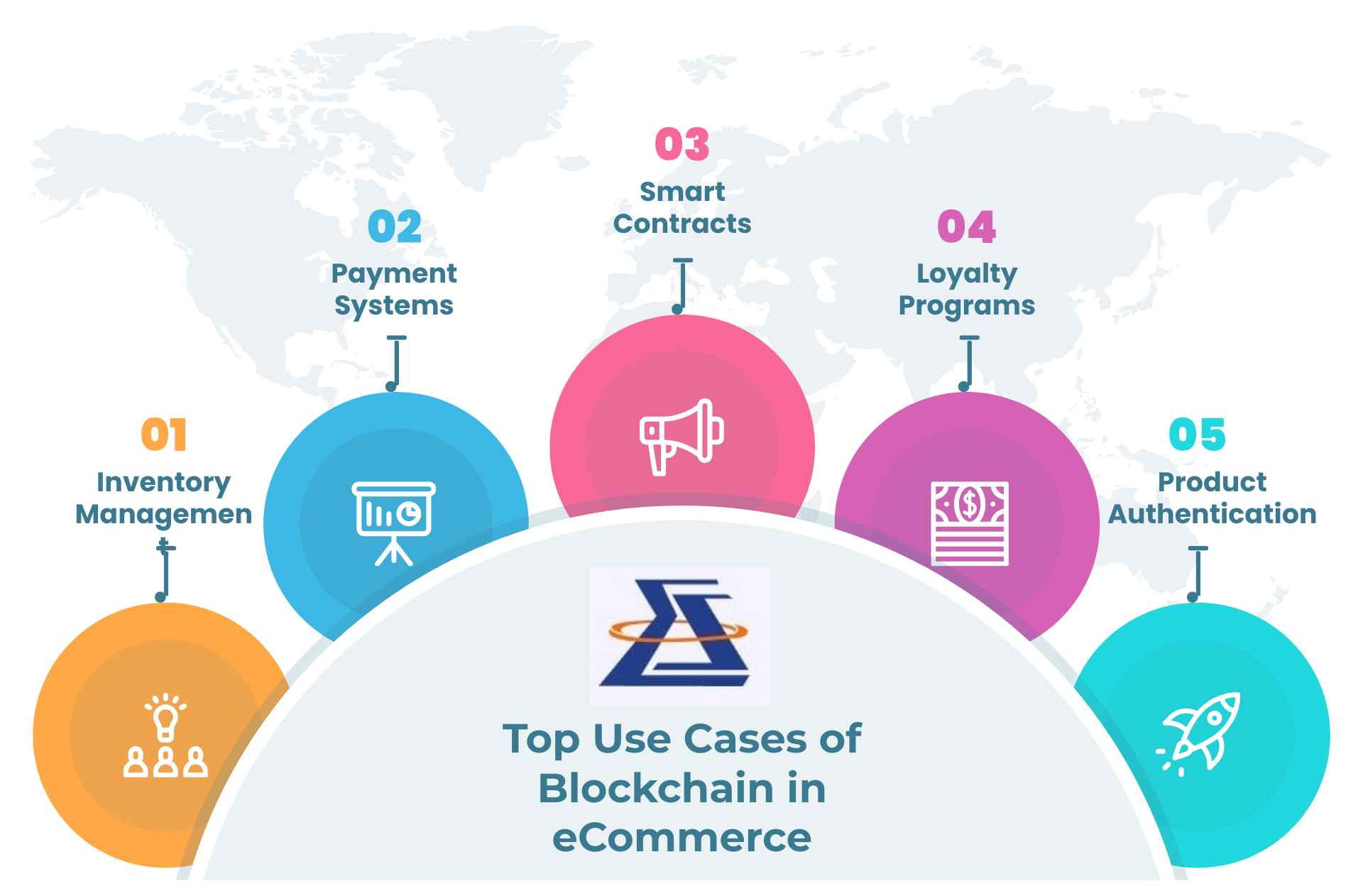
Blockchain for Payment Systems
Cryptocurrency Payments
The best blockchain platforms for eCommerce now accept cryptocurrency payments through blockchain-based payment systems. Customers who shop with Bitcoin and other cryptocurrencies can purchase more efficiently with these digital payment methods.
Cross-Border Payments
Blockchain payment solutions revolutionize international transactions by eliminating expensive currency conversion fees. Blockchain cross-border payments operate throughout the world at once by serving as a single universal money format.
Blockchain in Supply Chain and Inventory Management
Tracking Product Movement
Blockchain development services enable precise tracking of every item in your inventory. Blockchain-based inventory management shows you each item’s exact location so you can prevent stockouts while having the right amount of products on hand.
Reducing Counterfeiting and Fraud
Blockchain solutions for eCommerce create unique digital signatures for products. Each product receives its permanent identification mark. Blockchain technology for online businesses makes it nearly impossible for counterfeiters to sell fake items online.
Smart Contracts for eCommerce Transactions
Automating Transactions
Blockchain smart contracts act as self-executing digital supporters, running purchase and delivery tasks on schedule. By implementing eCommerce blockchain development, these capable helpers ensure that every part of a transaction takes place exactly according to plan.
Dispute Resolution
eCommerce Blockchain solutions in the USA use smart contracts to solve disagreements automatically. The system features built-in rules that help resolve conflicts with fairness and speed within each transaction.
Blockchain for Loyalty Programs and Rewards
Digital Tokens for Customer Loyalty
Blockchain development companies in Florida are transforming loyalty programs into digital tokens. By making rewards digital, customers gain more reasons to participate and can more easily view their rewards.
Transferable Rewards
Blockchain use cases in online stores allow customers to trade or share their rewards. Exchanging loyalty points directly with others makes them more rewarding.
Blockchain in Product Authentication and Provenance
Ensuring Authenticity of Products
Blockchain for eCommerce security creates an unbreakable chain of evidence about a product’s journey. Buyers can use blockchain to confirm how products travel from origin to the shop.
Certifications and Documentation
With blockchain technology added to eCommerce systems, product certificates, and essential documentation remain safe and easy to view. Storing product documentation on a blockchain provides complete tamper-proof protection.
Every case demonstrates how blockchain technology enhances eCommerce transaction security while making online shopping smoother and more trustworthy. These new technologies show us how digital commerce will combine enhanced security measures with easy business processes in the future.
Challenges and Considerations for Implementing Blockchain in eCommerce
Scalability Issues
Even the best blockchain platforms for eCommerce face challenges in handling many transactions at once. Imagine a highway that gets crowded during rush hour—blockchain solutions for eCommerce can similarly slow down when too many people use them simultaneously. Leading blockchain development companies in Florida are actively working to solve this challenge.
Regulatory Concerns
As blockchain technology evolves, businesses implementing blockchain payment solutions must navigate changing rules and regulations. Companies that use blockchain technology must remain flexible and update their eCommerce platform as new laws take effect, just like developers who need to adjust guidelines as building codes change.
Integration with Existing Systems
Merging eCommerce blockchain solutions in the USA with current business systems can be like fitting puzzle pieces from different sets. While blockchain development services for eCommerce can help, connecting traditional eCommerce platforms with new blockchain-based payment systems requires careful planning and expertise.
Consumer Adoption
Getting customers comfortable with blockchain for eCommerce security is like teaching someone to ride a bicycle—it takes time and patience. While some shoppers eagerly embrace new technologies, others may hesitate to use blockchain technology for online purchases, requiring businesses to provide education and support.
Future of Blockchain in eCommerce
Decentralized eCommerce Marketplaces
What Are Decentralized Marketplaces?
Users can transact online with each other because blockchain enables direct marketplace connections without needing established eCommerce sites. Blockchain lets users make P2P exchanges through smart contracts that trigger once agreement terms are met.
Challenges:
Adoption by Consumers and Sellers:
All data and trading actions under current eCommerce platforms remain under the complete control of company owner entities. Through blockchain technology for online businesses, sellers can maintain greater control of their items, and customers can handle transactions securely without needing to depend on central managers.
Increased Privacy and Autonomy:
Users who shop in decentralized marketplaces will protect their personal information better because they retain direct contact with their financial transactions.
Global Reach:
These platforms will operate without borders using a single system that speeds up cross-border deals compared to official marketplaces.
Challenges:
Adoption by Consumers and Sellers:
The shift to decentralized marketplaces will require adoption by both consumers and businesses who are unfamiliar with blockchain technology or reluctant to embrace cryptocurrency payments.
Scalability:
The growth potential of decentralized platforms depends on their ability to process a large number of transactions effectively. Bitcoin’s Lightning Network, like other Layer 2 solutions, helps solve scalability challenges.
Blockchain and AI Integration
AI and Blockchain Synergy
The future of blockchain in eCommerce goes beyond decentralization by uniting with artificial intelligence and machine learning technologies. By joining blockchain technology with AI systems, eCommerce systems can improve and offer a better shopping journey to all users of the platform.
Future Impact
Predictive Analytics
Blockchain helps companies safely store large data sets for AI systems to study consumer patterns and improve their operations. The partnership will create more customized retail interactions and improve market predictions.
Automated Customer Service:
Smart contracts stored on the blockchain assist AI-powered customer service and chatbots in responding to complaints immediately, handling returns, and proving product location in real-time.
Enhanced Fraud Prevention:
When linked to AI systems, blockchain technology detects unusual payment activities to prevent fraud from happening.
Challenges:
Complex Integration:
Blockchain integration for eCommerce, along with AI in operations, needs extensive technical knowledge and financial resources.
Data Privacy Concerns:
The enormous data demands of AI systems create privacy challenges regarding personal data management and storage that even blockchain’s security features cannot fully solve.
Blockchain-Powered Digital Identity Solutions
The Need for Digital Identity in eCommerce
As online shopping continues to expand globally, more potent, uniform methods of confirming user identities are required. Blockchain helps verify identities securely while reducing fraud threats and making website interaction easier for everyone.
Future Impact:
Self-Sovereign Identity:
Blockchain technology lets users manipulate their identification information freely. Users can now confirm their identity through blockchain securely without needing outside help and without sharing personal data across multiple services.
Frictionless Shopping Experience:
Users can use blockchain identity solutions to create accounts, pay, and check out quickly without logging in or repeatedly filling out forms.
Challenges:
Regulation and Privacy Concerns:
Governments will gradually accept digital identity rules that work with blockchain systems alongside international privacy regulations.
User Adoption:
People need time and education before understanding the advantages of self-sovereign identity operations.
Tokenization and Blockchain-Based Loyalty Programs
What is Tokenization?
A blockchain platform lets us make digital tokens that act as digital stand-ins for physical items. Users collect tokens when they shop and then use the tokens for rewards and price cuts.
Future Impact:
Better Customer Engagement:
Blockchain loyalty systems allow customers to track loyalty points easily because they provide secure data transparency. Customers can also easily trade their tokens through decentralized exchanges, earning more flexibility than regular loyalty schemes.
Cross-Platform Loyalty:
Users can use the loyalty points they collect from one eCommerce store on different platforms through the power of blockchain. When businesses work together with these platforms and reward customers more often, they will benefit from it.
Tokenization of Assets:
Blockchain platforms can list physical products, such as luxury goods and real estate, for buying and selling, expanding eCommerce into new digital product types.
Challenges:
Legal and Regulatory Compliance:
Washington State defines strict rules for the behavior of digital currency transactions involving loyalty points and assets. Blockchain systems must also adhere to proper financial legislation in their operating areas.
Consumer Education:
To make token-based loyalty programs work, consumers need to understand how blockchain-based tokens operate and what they deliver. Introducing blockchain requires thorough teaching and slow user acceptance.
Blockchain for Supply Chain Transparency
The Importance of Supply Chain Transparency
More shoppers now want to know how products are produced and how they affect the planet. Blockchain technology continuously tracks products moving across the supply chain from origin to end user.
Future Impact:
End-to-End Traceability:
Organizations can now show consumers precise details about their products from the beginning materials to the final delivery.
Proof of Sustainability:
Companies can establish product transparency through blockchain by documenting their sustainability methods. This allows customers to make fact-based shopping selections.
Efficiency Gains:
Blockchain gives supply chain partners the same real-time data access across their operations to fight delays and issues with their supply chain operations.
Challenges:
Data Integrity:
The reliability of our blockchain network depends on putting valid and trusted data into the system. Imperfect or fake data could destroy the entire system.
Adoption by Suppliers:
The entire supply chain, including smaller manufacturers and suppliers, would need to adopt blockchain technology, which could be a slow and costly process.
Conclusion
Blockchain solutions for eCommerce are revolutionizing online business through enhanced security, seamless payments, and more intelligent operations. From blockchain-based payment systems to innovative inventory tracking, the best blockchain platforms for eCommerce are creating a more transparent and efficient digital marketplace for everyone.
Future Outlook
Businesses that embrace blockchain technology for online business will have the future of eCommerce. As blockchain use cases in online stores expand and solutions mature in the USA, we’ll see even more innovative applications. As we start to integrate blockchain fully into eCommerce systems, fresh opportunities keep appearing.
How Can Sigma Solve Help?
To ensure your organization stays modern in today’s digital transformation, partner with trusted blockchain development companies in Florida or your region to explore blockchain development services. Start small with Blockchain payment solutions for e-commerce businesses, and gradually expand your implementation as you see results.