

Introduction
Imagine a future where Generative AI for Business doesn’t just automate tasks—it drives AI-powered business operations, creating new ideas, products, and experiences from scratch. That future is not a dream of the far off future anymore. And it’s fueled by generative AI.
Generative AI — a new type of artificial intelligence — is capable of generating entirely new content. It analyzes massive datasets and produces text, images, music, videos, and even code which can match human creativity. It’s a tool; it will help, it will invent.

Why are businesses interested in this anyway? Simple. Companies are reinvented by generative AI to operate, innovate, and serve customers. It’s taking the drudgery out of complex processes, freeing up creativity, making the customer experience better, and making the entire operation run smoother. The result? Fast, smarter, more competitive businesses are the key today.
In reality, Generative AI is not simply changing industries, it’s rethinking how businesses work and compete in the virtual domain.
1. What is Generative AI and How Does It Work?
What is Generative AI?
The generative AI business solutions are those systems that create new data or content by analyzing and learning patterns from existing datasets to make AI better in business. These systems are general and can generate text, images, music, video, and even solutions to some complicated problems, making them useful tools across all industries.
Key Technologies Behind Generative AI:
- Natural Language Processing (NLP):
GPT-3 and GPT-4 models are great at generating human-like text, which makes them good at mimicking human modes of tasks like content creation, customer support, and writing of reports. - Generative Adversarial Networks (GANs):
They are pitted against each other so that two AI models can create images, videos, and incredibly realistic animations, by refining outputs. - Reinforcement Learning:
It can be used as a way for AI to learn from trial and error and optimize a decision, such as in logistics, game strategy or operational workflows where it makes sense to test the ideas. - Deep Learning:
The technology upon which AI is founded for processing huge amounts of information, identifying patterns and creating outputs that are precise and creative.
How Does Generative AI Work?

With generative AI, you train on large datasets, recognize patterns, and come up with content based off of what you taught it. Here’s a simplified breakdown of how it works:
Training on Data:
Massive datasets — text, images, code or more — are fed to the AI and it learns the patterns, structures and relationships that exist in that data. It is able to generate new and original outputs because of this.
Example: The way GPT 3 can generate human-like text is by learning from billions of text data points.
Generating Outputs:
The AI goes on to create creative content through user prompts after training, using the learned patterns.
Example: AI driven business transformation is being presented in tools like DALL·E, where given a textual description, they produce an image of “a futuristic city in the style of Van Gogh”.
Real-World Examples of Generative AI
- ChatGPT:
It automates customer support by creating human-like responses that help businesses become more efficient and more satisfied with customers. - DALL·E:
It produces original visual content for industries like marketing and design generating custom illustrations. - Codex:
It makes software development transforms by creating code from simple language prompts, so programming tasks are speeded up.
2. Key Benefits of Generative AI for Business Operations
Boosting Efficiency and Productivity
Generative AI is great at making boring, repetitive jobs boring, and letting your employees get on doing the strategy and the creativity.
Automation of Mundane Tasks:
Time consuming jobs like customer support, report generation, or data entry can be handled by AI.
Example: Generative AI powered chatbots provide 24/7 customer service responding questions and resolving problems without any human presence.
Enhancing Creativity and Innovation
Generative AI is a virtual creative assistant powering marketing, branding and product innovation for business.
AI as a Creative Partner:
Examples of Generative AI for Business are created by designing marketing materials, coming up with new content, or dreaming up a new product design using Generative AI for Business.
Example: Marketing copywriting, custom logo designs, or promotional visuals are all created by AI tools, making it a time saver.
Improving Customer Experience
Features of Generative AI mean businesses can offer incredibly unparalleled experiences to their customers, pleasing and promoting customer loyalty.
Personalization at Scale:
AI uses it to create customer tailored content, product recommendations and advertisements.
Example: Using AI, Netflix and Amazon recommend movies, shows or products based on what users have viewed and bought in the past.
Data-Driven Decision-Making
Through a vast amount of data and then delivering actionable insights, generative AI helps businesses make smarter choices.
Advanced Analytics:
Real time AI will analyze trends, predict consumer behavior, as well as readjust operations.
Example: In order to do such predictions and automate the provision of inventory, retailers employ AI.
Cost Reduction
However, an area where Generative AI saves costs is in automating tasks and optimizing processes that are done in the operations.
Lower Operational Costs:
Using AI to handle customer service, marketing and content creation, companies save on labor costs.
Example: For large support or creative teams, auto customer service chat and content generation reduces requirements.
Explore the diverse advantages of generative AI in the following breakdown, showcasing real-world examples and how they drive impact across different sectors
3. Industry-Specific Applications of Generative AI
Healthcare and Life Sciences
However, Generative AI is creating a transformational impact on healthcare: from expediting drug discovery, advancing treatment personalization, improving diagnostic accuracy, and optimizing administrative efficiency.
Applications of Generative AI in Healthcare
Drug Discovery & Design
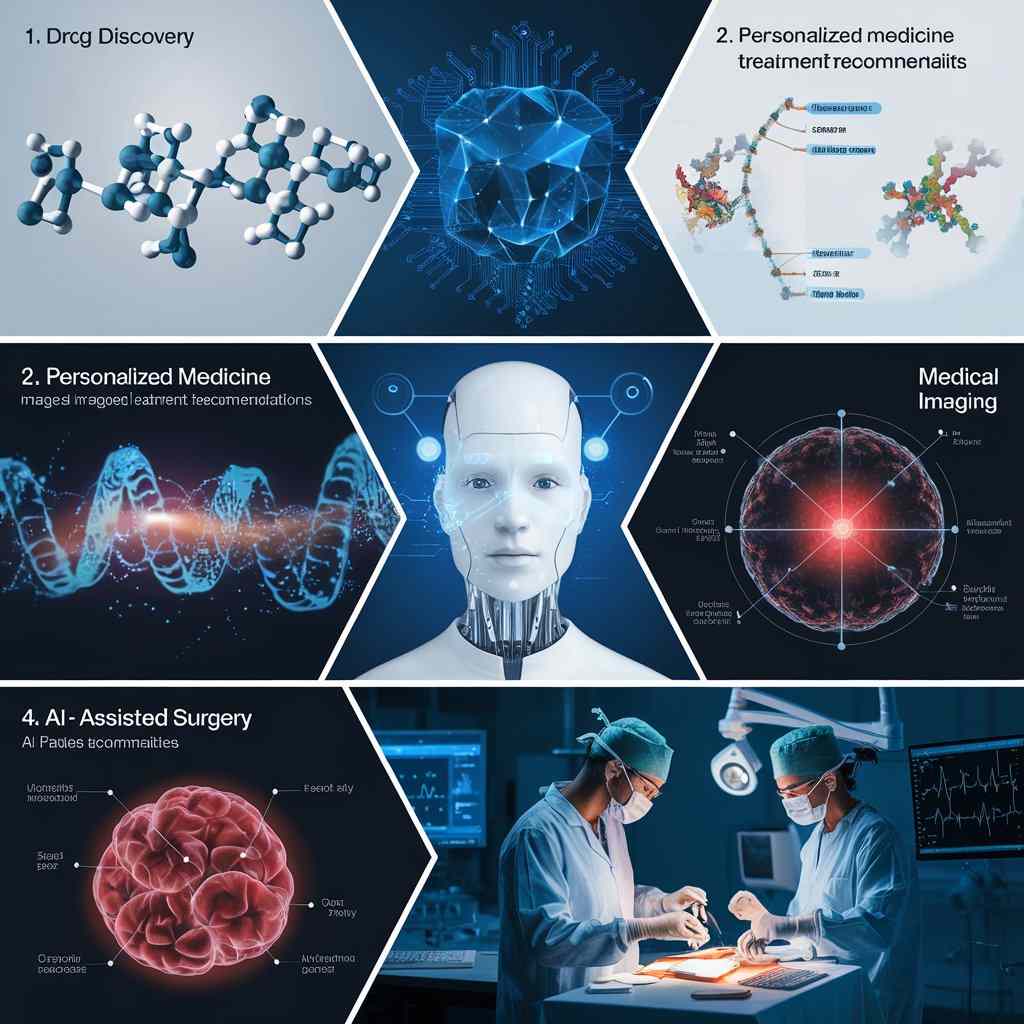
It is creating novel molecular structures to significantly shorten the time needed to develop new drugs.
Example:
Insilico Medicine shows how Generative AI for Drug Discovery can design new drug molecules while significantly enhancing AI-powered Business Operations within the Pharmaceutical industry.
That same year, they discovered a drug candidate for idiopathic pulmonary fibrosis in 46 days, compared to years. By using their platform, they generate novel molecular structures that effectively target specific diseases.
Personalized Medicine
By analyzing genetic and clinical patient profiles, AI helps deliver tailored treatment plans.
Example:
Generative AI is leveraged by Tempus to analyze genetic and molecular data to recommend personalized cancer treatment. The AI gives an individual patient’s genetic makeup to predict what treatment would be best for that patient.
Medical Imaging & Diagnostics
With this generative AI, this can help improve diagnostic accuracy by understanding patterns in image data and giving actionable advice.
Example:
PathAI’s models also use AI powered to guide pathologists when they suspect that someone has cancer. Deep learning systems in their systems detect abnormalities in medical images and increase diagnostic accuracy and speed.
AI-Assisted Surgery
Advanced tools for minimally invasive procedures are provided by generative AI that supports surgeons to improve patient outcomes.
Example:
The da Vinci Surgical System from Intuitive Surgical uses generative AI to help in surgeries. By using AI is the AI able to suggest the most optimal movements, refine procedures and predict potential complications to allow for precision, and minimize risks.
Finance

Financials are radically being transformed by generative AI, fusing risk management, amplifying fraud detection, optimizing trading strategies, driving superior customer service and much more.
Applications of Generative AI in Finance
Algorithmic Trading & Strategy Generation
Generative AI is already transforming algorithmic trading by bringing us cost and profit efficient strategies that revolve around the market data.
Example:
Financial AI solutions entered a new dimension with generative AI business solutions such as JPMorgan Chase’s LOXM, which has used generative AI to develop high frequency trading strategies that realize AI for business.
Fraud Detection
Generative AI specifically makes fraud detection systems more accurate not only at preventing fraud in the first place but identifying any suspicious behaviors in real time.
Example:
Generative AI is helping Mastercard protect your card to monitor transaction data and spot suspicious patterns. The generated alerts used AI to reduce false positives and thereby generate highly accurate alerts for further investigation, protecting both consumers and financial institutions from fraud.
Credit Risk Assessment
Using Generative AI models, financial institutions are better able to assess credit risk comprehensively by analyzing alternative data sources.
Example:
Zest AI uses generative AI to evaluate creditworthiness from non-traditional data like social media activity or alternative transaction histories. It enables placements of applicants who lack traditional credit histories but helps lenders find higher levels of risk.
Customer Service (Chatbots & Virtual Assistants)
AI-powered assistants that deliver personalized guidance, perform transactions, and answer questions quickly, providing an effortless customer experience are proof points of Generative AI for Personalized Shopping.
Example:
With Bank of America’s Erica, an AI-driven virtual assistant, generative AI tailors financial advice, helps in performing banking tasks and answering customer queries using account history, making for higher user satisfaction and engagement.
Retail & E-Commerce

In retail and e-commerce, generative AI is transforming customer experiences, optimizing operations, and creating new marketing strategies.
Applications of Generative AI in Retail & E-Commerce
1. Personalized Shopping Experience
Beyond hyper-personalization, generative AI is all about analyzing customer preferences, likes and behaviors to then predict what a customer will like next.
Example:
Stitch Fix has a generative AI engine coupled with human expertise to recommend clothing to outfits for a customer based on a customer’s style, body type and purchase history. Fashion suggestions are generated by AI, and curated by human stylists to guarantee that the fit is right for individual preferences.
2. AI-Powered Product Recommendations
Generative AI expands cross selling and up selling by producing customized product suggestions based on user behavior.
Example:
With AI, when a customer searches for something on Amazon or browses a certain category, the products they’re likely to want to buy are recommended to them. These personalized recommendations sell more, increase customer satisfaction, and increase engagement.
3. Virtual Try-On & Augmented Reality
Through generative AI, customers can see products without purchasing them ahead of time through virtual try-ons.
Example:
Virtual Artist from Sephora lets users try on makeup products virtually. The visualizations are created for the user’s skin tone and facial features by AI, increasing purchase confidence and lowering return rate.
4. Automated Content Creation for Marketing
With the help of generative AI, businesses can easily automate the process of creating marketing content in an effort to scale their efforts.
Example:
The AI works in the service account of H&M to create personalised ad copy, product descriptions, and promotional content for these customers. This not only helps in having marketing hitting home to different customer segments but also helps in saving time and money.
Manufacturing
Advanced design, predictive maintenance, and process optimization respectively are becoming more efficient and innovative thanks to generative AI.
Applications of Generative AI in Manufacturing
1. Generative Design
Generative AI aids in the designing of better optimized, more functional products.
Example:
Generative AI applications applied to business use cases helps manufacturing AI Solutions (including those used by General Electric (GE)) combine the power of Additive Manufacturing to create lighter and more efficient components for manufacturing resulting in production efficiency.
2. Predictive Maintenance
Generative AI predicts equipment failures and proactively maintains your equipment, without tying up the downtime.
Example:
Supplier Siemens delivers AI to use in predicting machinery sensor data and when maintenance is required, optimizing factory operations and extending equipment lifespans.
3. Supply Chain Optimization
Generative AI can help the supply chain prediction of disruptions, as well as inventory optimization.
Example:
AI is used by BMW to let it analyze supplier data and production schedules. This helps the company minimize delay, maximize logistics and cut down overall supply chain costs.
4. Quality Control
Quality assurance is made better using AI driven systems that can spot defects, which the human inspection might not.
Example:
Generative AI powered vision systems help Tesla inspect vehicles and parts made inside of its factories. The systems produce high quality reports about defects, indicating high production standards.
Marketing and Advertising

Automated content creation, customer targeting and trend forecasting, marketing uses of generative AI.
Applications of Generative AI in Marketing & Advertising
1. AI-Generated Content
The fact is that AI produces engaging content for ads, blogs, emails and social media at scale.
Example:
OpenAI’s All GPT models also enable marketing teams to generate the ad copy, blog posts, and other marketing material for e-commerce using AI-Driven Marketing Campaign. Through AI, you use past campaign insights to craft unique messages that take less time, less effort.
2. Dynamic Ad Creation
Generative AI makes it possible to generate personalized ads that connect with certain demographics.
Example:
Coca-Cola uses AI to generate ad designs and messaging tailored to diverse customer groups. These dynamic ads improve engagement and ROI by appealing to targeted audiences.
3. Customer Segmentation & Targeting
With AI, you can segment customers exactly and recommend them.
Example:
To boost customer retention, Netflix employs AI to propose shows and movies according to each user’s own tastes so the experience becomes highly personalized.
Market Research & Trend Forecasting
Generative AI based on data, allows the businesses to beat the competition in the next few years by predicting future trends.
Example:
AI drives how Spotify predicts music trends by creating playlists and content recommendations congruent with what listeners are already starting to prefer.
Energy

The energy sector is being rocked by generative AI that gleans efficiency, optimizes renewable energy resources, and increases sustainability.
Applications of Generative AI in Energy
1. Renewable Energy Optimization
Generative AI enables renewable energy systems to analyze patterns of both energy demand and supply for efficiency.
Example:
AI has helped Google’s DeepMind lower cooling energy consumption in the company’s data centers to 40%. In its role as the energy usage pattern analyst, generative AI models search for the most energy-efficient path, and help reduce operational costs and environmental impact.
2. Smart Grid Management
In systems with renewable energy generative AI optimises energy distribution and grid stability.
Example:
AI powered models are used by Schneider Electric to forecast energy demand, to predict outages and to optimally flow energy in the smart grid. It helps to allocate resources efficiently and minimizes energy waste.
3. Predictive Energy Maintenance
The more predictive AI becomes, the more reliable the equipment will be and the easier it will be to schedule maintenance.
Example:
Companies like Siemens Energy turn their AI technology into an AI powered business to analyze turbine and generator sensor data and detect potential failure. With this predictive maintenance approach, downtime is greatly minimized, performance greatly enhanced and repair costs greatly reduced.
Entertainment and Media
The entertainment industry is on the brink of a massive generative AI revolution that is changing the way the industry creates, predicts, and personalizes content — and making the production of that content more efficient and cost effective to execute.
Applications of Generative AI in Entertainment and Media
1. Film and Animation Production
AI automates animation as well as the generation of the scenes, cutting down on the time needed to complete projects.
Example:
By adding AI to speed up the animation process, Disney is able to make animation cheaper.
2. Music Generation
Music generation using real time is made possible with AI allowing musicians to collaborate and experiment.
Example:
Generative AI powered Endlesss allows jam sessions to be created live, by analyzing then generating complementary melodies and beats, to unleash a more creative, collaborative approach to the art of the jam session.
3. Content Personalization
Generative AI is helping to increase user engagement through personalization of content recommendations.
Example:
YouTube and Netflix use user behavior to figure out what personalized video recommendations to make, which helps users to discover better and keep them logged in longer.
4. Automated Scriptwriting
Scriptwriting and storytelling is starting to use AI and is automating creative tasks.
Example:
All of Sunspring, a sci-fi short film, was written by an AI model. This technology is still in its infancy, but eventually could automate intricate jobs such as creation of storylines, dialogue manufacturing and script editing.
Legal and Compliance
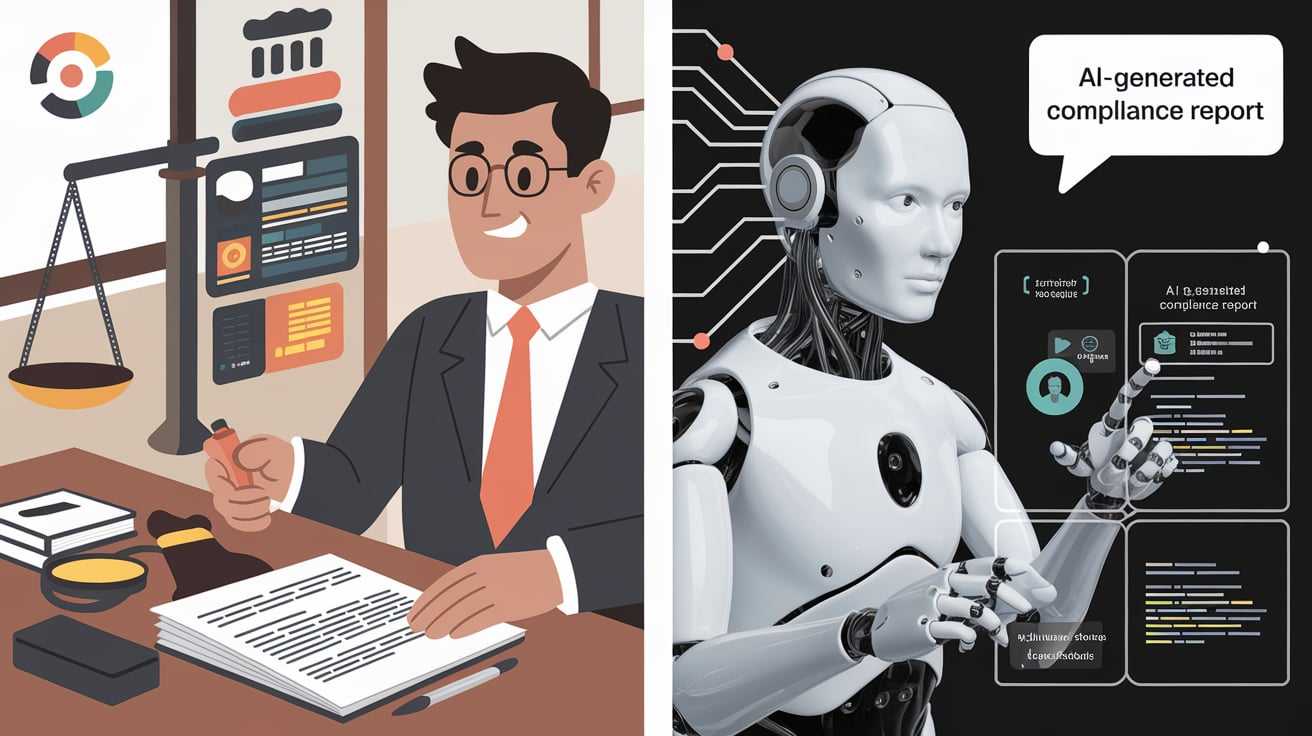
The process of routine contraction and process automation driven by generative-AI is enabling document analysis, legal research, and compliance to be more agile.
Applications of Generative AI in Legal and Compliance
1. Contract Review & Analysis
Generative AI can identify and generate summaries of complex contracts.
Example:
According to companies such as AI for Legal Document Analysis which use AI to detect problematic clauses and create summaries instantly, AI for Legal Document Analysis now exists through automation for AI solutions for legal workflow automation. It decreases human error and tremendously reduces the review time.
2. Legal Research
AI models simplify research by summarizing huge amounts of legal data.
Example:
ROSS Intelligence produces insights and summaries of legal precedents and case law, freeing lawyers of time and improving case study preparation.
3. Regulatory Compliance Automation
Automated compliance processes that adhere to governmental rules are what makes generative AI.
Example:
Regulated industries trust IBM Watson to help them track and react to changing compliance needs. With this, the AI generates automated reports and recommends configurations that need to be made to the corporate policies in order to minimise the risk of non compliance.
4. Case Studies of Businesses Using Generative AI for Operations

Today, business operations are being enhanced by the industry wide traction of generative AI, with it helping to increase the efficiency, creativity and the decision making. For example, below we have listed some detailed case studies of businesses, which utilize generative AI to revolutionize their business operations.
1. Manufacturing: Siemens
Company:
Siemens
Industry:
Manufacturing & Industrial Automation
Overview
A global leader in industrial automation, Siemens too has successfully integrated generative AI in its business and has been able to work wonders on product design and manufacturing processes. Siemens has used AI driven tools to speed up innovation, improve manufacturing efficiency and optimise supply chain.
Key Applications of Generative AI
1. Generative Design for Machinery
- For Siemens it’s ‘generative AI business solutions,’ like AI for Supply Chain Optimization that are key to being successful in using generative AI to optimize their supply chain and design processes.
- The AI assesses parameters of material strength, weight, and production constraints, and generates optimized structural solutions.
- These AI generated designs are used by engineers to look for faster ways to innovate and improve the functionality of products.
2. Supply Chain Optimization
- The multiple datasets analysed by AI tools include the supplier information, the production schedules, and market demand forecasts.
- By eliminating the ability for forecast error, Siemens is therefore able to predict demand more accurately, minimize inventory waste and optimize delivery times.
- And a more streamlined and more cost effective supply chain operation.
3. Cost Savings & Efficiency Gains
- By incorporating generative AI into the design process it shortens production cycles and cuts down on material waste.
- Errors have been reduced to improve both accuracy and automation in production to produce higher quality outputs.
Impact of Generative AI
- Faster Design-to-Production Cycles:
With AI, it dives ahead from initial concepts to finished products at speeds that reduce development time. - Enhanced Product Quality:
Manufactured products achieve industry standards with AI driven optimization of errors. - Agile and Cost-Effective Operations:
This has led to lower operational costs through reduced waste and improved resource utilization and flexibility in meeting market demands.
Results Achieved by Siemens
- Reductions of 30% in time to market for new product designs.
- Increased accuracy in production with associated reduction in rework and material wastage.
- A supply chain capable of reacting to variations in the demand.
2. Healthcare: GE Healthcare
Company:
GE Healthcare
Industry:
Healthcare & Medical Devices
Overview
Generative AI enables GE Healthcare to help provide more accurate, more efficient and more useful medical imaging and diagnostic tools. Healthcare providers can guarantee that operations in the healthcare industry are rolled out fast and precise through AI technology integration.
Key Applications of Generative AI
1. Enhanced Medical Imaging
- Compared with traditional imaging methods, generative AI can improve the image resolution and addition of visualization of the organs or tissues that are difficult to visualize with current imaging methods.
- It helps the healthcare professionals identify anomalies like tumors or fractures more accurately.
2. Automated Diagnostics
- The analysis of imaging data is automated by AI and it provides preliminary diagnoses, prioritizing high priority cases.
- It also speeds up patient care and reduces the workload for radiologists whilst increasing the speed at which they can make decisions.
3. Personalized Treatment Recommendations
- AI takes patient data and imaging to propose the best treatments tailored to an individual health profile.
Impact of Generative AI
- Improved Diagnostic Accuracy: Generative AI reduces the amount of human error and therefore improves the accuracy of diagnoses.
- Faster Decision-Making: The time needed by radiologists and clinicians is saved with automated analysis and prioritization.
- Cost Savings: Routinely diagnostic tasks are automated to have an impact on both cost and quality of care for patients.
Results Achieved by GE Healthcare
- An increased speed and accuracy for diagnosis.
- Highly significant reduction in human errors in image analysis.
- More personalized treatment plans to improve patient outcomes.
3. Retail: H&M
Company:
H&M
Industry:
Retail & Fashion
Overview
Generative AI is also used by H&M to fine tune its stock, predict demand and deliver personalised marketing to each customer. These applications help the brand stay competitive, save costs and serve tailored experiences to customers.
Key Applications of Generative AI
1. Demand Forecasting
- Past sales data, customer preferences, and market trends are taken by AI to predict future demand.
- It ensures that H&M has the most optimum stock levels for maintaining both too much stock inventory as well as too little.
2. Personalized Marketing Campaigns
- Advert creation and customer preferences comes from thanks to generative AI.
- Email campaigns and promotions are improved through tailored engagements and sales.
3. Supply Chain Optimization
- Due to AI, it knows when demand is forecasted to spike and so adjusts its production and supply schedules.
- It helps to respond faster to trends and waste less.
Impact of Generative AI
- Reduced Inventory Costs: Better forecasting of demand ensures better stock planning.
- Enhanced Customer Engagement: Personalized marketing increases conversion, and also increases customer loyalty.
- Efficient Operations: Supply chains are optimized using AI, quick responses to market shifts.
Results Achieved by H&M
- Better demand predictions leading to lower inventory costs.
- targeted, personalised marketing to increase revenue.
- Timely and relevant product offerings improve the satisfaction of customers.
4. Financial Services: JP Morgan Chase
Industry: Financial Services & Banking
Use of Generative AI: Financial Analysis and Risk Management with the help of AI
Overview
The bank is using generative AI to better understand and analyze financials, make decisions more quickly and efficiently, and minimize risks, writes JT Spatial. Core banking processes such as compliance and fraud detection, streamlining market trends, usage of AI models look at vast datasets and predict outcomes.
Impact
- Automated Financial Reports:
Such as generating comprehensive financial reports from raw data and summarizing it while adding narrative insights which improve decision making speed and accuracy. - Risk Prediction & Management:
Using today’s data, AI models can predict market shifts, detect potential fraud, and even look for financial risks, all while the data is happening. The resulting actionable risk scenarios help inform investment and operation decisions. - Customer Service Automation:
Using ChatBots and virtual assistants, common customers’ queries are handled by AI, easing the job load of human agents and shortening response time.
Results
- Reduced financial reporting time and increased time.
- Increased risk prediction and robust management strategies.
- Automated customer service processes that lead to cost savings.
- Better fraud detection and better governance.
5. Technology: Adobe
Industry: Creative Software & Technology
Use of Generative AI: Content and Design Creation using AI
Overview
Its generative AI lives within Adobe’s Sensei AI platform and is integrated into its creative suite. The platform helps creators generate content, edit videos and design, all in faster workflows and the help of non-design folks set up to produce professional grade content.
Impact
- Generative Design:
AI tools present suggested layouts, graphics, images and ideas, easing the design process with automated, repetitive tasks and creating original creative ideas. - Content Generation:
Image and video editing, increasing resolutions, removing backgrounds, and creating artwork from templates are all automated by AI powered tools. - Personalized Marketing:
Using AI, Adobe makes personalized marketing materials, like customized ads, emails, and web content, which increase customer engagement.
Results
- Enabling accelerated creative processes and reduction of design times.
- The ability to produce high quality designs by non professionals.
- Personalized marketing campaigns which will engage more customers.
6. Logistics: DHL
Industry: Logistics & Supply Chain
Use of Generative AI: Delivery Routes and Predictive Maintenance with AI Optimizations.
Overview
Generative AI is used by DHL to optimize delivery routes, inventory management and maintain fleet schedules. AI facilitates timely deliveries, reduces the operation cost and improves customer satisfaction.
Impact
- Optimized Delivery Routes:
By incorporating real time traffic, weather conditions and time constraints in the delivery routes that AI creates, costs are minimized and delivery reliability improves. - Predictive Maintenance for Fleets:
Delivery vehicle maintenance is predicted by AI, with proactive repairs and decreased unplanned downtime. - Inventory Management:
AI predicts demand patterns in order to keep inventory levels optimum, and delivers products in a timely and efficient manner.
Results
- Route optimization helps reduce cost to deliver.
- Lowered both fleet downtime and maintenance costs.
- Improving customer satisfaction in terms of on time and efficient delivery.
5. Challenges and Risks of Generative AI in Business
Working with generative AI will be fraught with challenges and risks, but businesses need to address these if it is going to have wide and ethical use within them. For an overview, below are your key concerns and solutions.
1. Ethical and Legal Issues
Bias in AI
- Challenge: Bias in the training data could make its way into the outputs of generative AI models creating discriminatory or unfair outcomes.
- Impact: And these can hurt marginalized groups and impugn the reputations of businesses.
- Example: Hiring tools that discriminate depending on a biased dataset generated by AI.
Misinformation
- Challenge: Deepfakes, fake news, fabricated data, generated using generative AI, are none of these things.
- Impact: This harms people’s or brands’ reputation and undermines trust.
- Example: The spreading of fake news through deepfakes impersonating public figures.
Privacy Concerns
- Challenge: Sensitivity and compliance in relation to customer information tend to make AI training reliant on large datasets.
- Impact: Data mismanagement can result in liability and loss of consumer trust.
- Example: Not handling your customer data properly according to GDPR or CCPA regulations.
2. Job Displacement
Automation of Jobs
- Challenge: Generative AI can do automation tasks like content creation, customer support and data analysis.
- Impact: That could mean job losses in positions heavily based on functions like these.
- Solution: Because businesses encompass people, their focus should be reskilling and upskilling their people to train them to manage and work with AI driven roles.
- Example: AI taking care of ‘routine,’ and workers tackling ‘strategic’ or more creative tasks.
Collaborative Workflows
- Opportunity: Generative AI can actually stand in and help make up for work that has been taken away from us from human labour.
3. Security Risks
AI Vulnerabilities
- Challenge: Advances in Generative AI allow us to employ the technology to perform harmful content generation, bypass security measures, and even launch fraudulent schemes.
- Impact: This helps make businesses more prone to be hacked or misused due to these vulnerabilities.
- Example: Phishing emails created by hackers and AI to resemble actual communication giving them high accuracy.
Reliability Issues
- Challenge: While AI generated content may be inaccurate or not of good quality.
- Impact: Using AI can have costly errors, when you don’t have human oversight.
- Example: AI writing financial reports that aren’t accurate, or predicting the market incorrectly.
- Solution: Make sure all AI generated outputs go through human oversight and quality assurance.
Examples Highlighting Risks
- Deepfakes in Media: AI generated videos of celebrities or public figures being used for misinformation campaigns.
- Job Automation in Content Creation: Writing tools automating the production of entry level content creators, a shift in demand away from lower skill creative roles towards higher skill creative roles.
- AI-Generated Financial Fraud: Security protocols being bypassed by AI models being manipulated to create fraudulent reports.
6. The Future of Generative AI in Business

Generative AI is set to revolutionize industries further by evolving into a collaborative, ethical, and indispensable tool for businesses. Here’s a glimpse into the potential future:
1. Increased Integration Across Industries
Ubiquitous AI Adoption
- Future Trend: Generative AI models will find applications on all scales in virtually every major industry touching healthcare, finance, retail and entertainment.
- Impact: AI will play a critical role in streamlining operations, as well as increasing efficiency and helping to innovate customer experiences, for businesses.
- Example: In logistics and retail, logistics and retail AI powered supply chain management will be common practice, inventory optimization, waste reduction and speed of delivery become the norm.
Industry-Specific Integration Examples
- Healthcare: Using artificial intelligence to give personalized treatment plans and diagnostics.
- Retail: Demand forecasting, personalized recommendation, inventory optimization that’s driven by generative AI.
- Finance: AI doing compliance, fraud detection and financial modelling.
2. AI as a Collaborative Tool
Human-AI Partnership
- Future Trend: What is changing is ‘AI moves against humans’ to ‘AI works along humans’ AI can help human creativity and decision making.
- Impact: The real future of generative AI is to be a collaborator, and enable professionals to work smarter and faster.
- Example:
- Designers: Making the first designs using AI and then using our skills to refine and personalise based on creative visions.
- Content Creators: AI is doing the nitty gritty of drafting content — the outlines or the first draft — and letting writers tackle the rest — the tone, the nuance, and the story.
- Business Analysts: AI building predictive models which are also interpreted and used strategically by human experts.
Key Benefits:
- Faster workflows.
- Reducing mental fatigue due to repetitive tasks.
- AI generated inspiration to improve creativity and innovation.
3. Regulation and Governance
Ethical Frameworks for AI
- Future Trend: As AI is increasingly incorporated and governments and even organizations set rules and guidelines for AI use, governments and organizations will need to draw up, and even enforce, regulations that will serve to ensure responsible use of AI.
- Impact: Next we will be covering privacy concerns, bias mitigation, and accountability in AI driven decision frameworks.
- Example:
- The EU’s AI Act is a breakthrough in controlling the use of AI, requiring that the technologies be classified and classified according to risk levels and very strict rules for high risk applications such as health and finance.
- Things like creating standards for detecting deepfakes around the world as a means to prevent the misuse of generative AI.
Challenges in Regulation:
- Balancing innovation and control.
- The adaptation of laws for fast moving AI technologies.
- Making sure that global cooperation across jurisdictions happens.
The Road Ahead for Businesses
Therefore, generative AI will likely be a key feature of rethinking business operations. If companies embrace this technology for ethical, collaborative and strategic use, they will be ahead of the curve.
Conclusion
Generative AI is no longer a vision for the future… It’s a real force of transformation that is transforming how businesses do business, compete and innovate.
Why It Matters
The future is here. But for businesses to stay in competition in a fast-changing market, they must be able to use generative AI. Experiment with AI tools now to increase operations efficiency, prompt better decision-making, and create personal experiences that delight customers. Get in touch with experts at SigmaSolve to guide your AI journey.
The Path Forward
The future is here. But for the businesses to stay in competition in a fast changing market, they must be able to use generative AI. Experiment with AI tools now to increase operations efficiency, prompt better decision making and create personal experiences that delight customers.
Closing Thought
Generative AI is a catalyst for innovation. The businesses that harness its potential will not only lead their industries but will also define the future of business itself.